
Kiến Thức Hay
For Adults/Adolescents, You Should Call/Activate EMS – Correct Answer
Th9
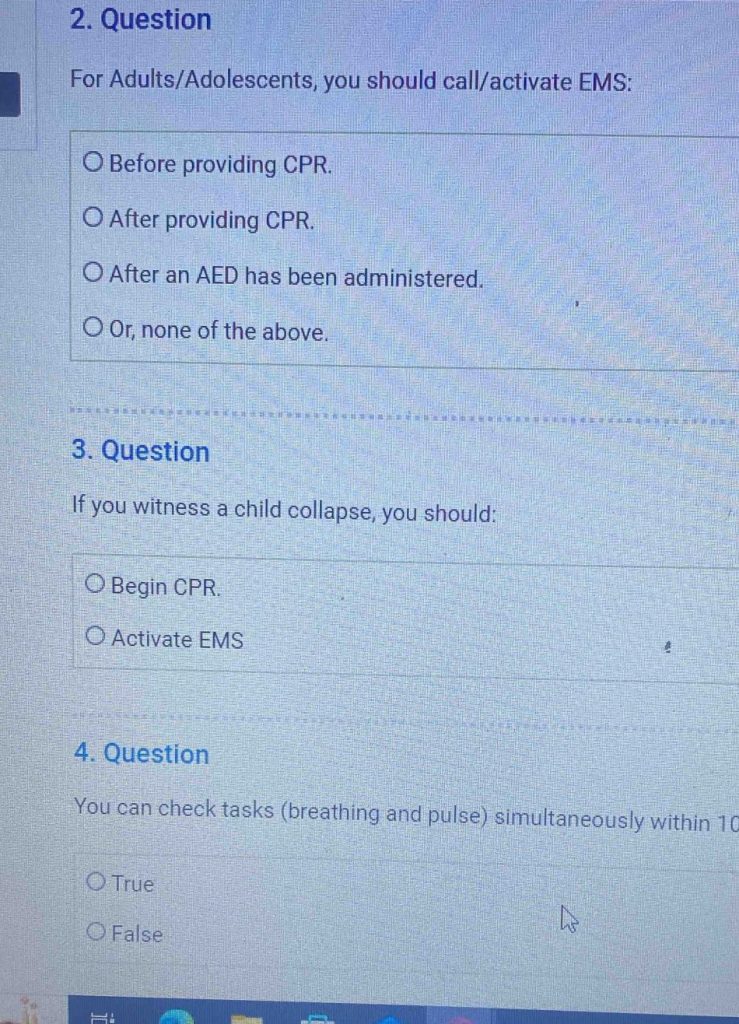
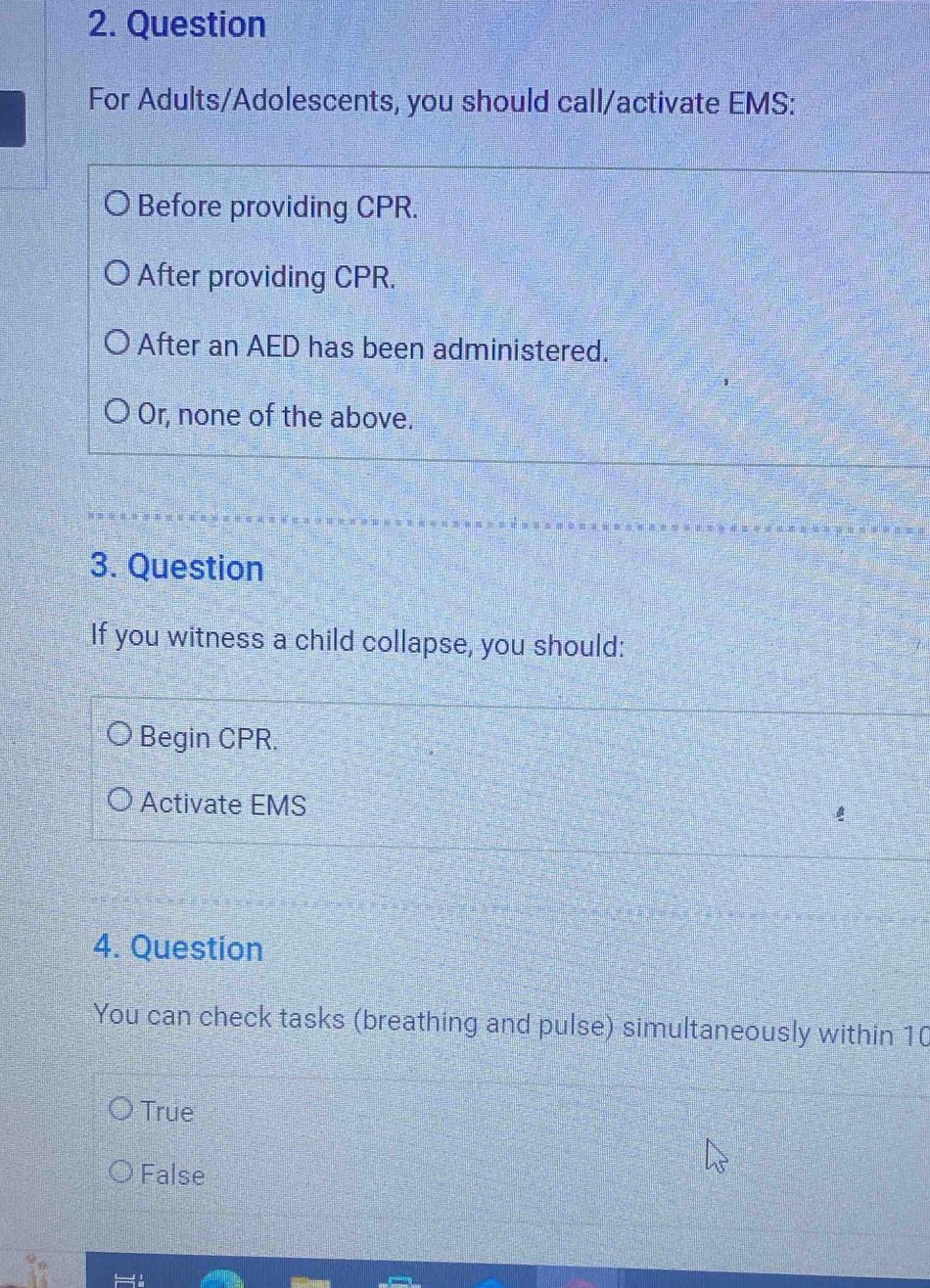
Question 2: For adults/adolescents, you should call/activate EMS:
- A. Before providing CPR.
- B. After providing CPR.
- C. After an AED has been administered.
- D. None of the above.
Question 3: If you witness a child collapse, you should:
- A. Begin CPR.
- B. Activate EMS.
Question 4: You can check tasks (breathing and pulse) simultaneously within 10 seconds.
- A. True
- B. False
The correct answer to Question 2 is A — Before providing CPR. When an adult or adolescent collapses, the rescuer should activate Emergency Medical Services first, then begin CPR. This sequence ensures professional help is on the way as early as possible, because adult cardiac arrests are most often caused by heart-rhythm problems that require defibrillation — something only EMS and AEDs can provide.
The correct answer to Question 3 is B — Activate EMS. When you personally witness a child collapse, the priority shifts to calling for help immediately, since witnessed collapse in a child suggests a cardiac cause rather than a respiratory one.
The correct answer to Question 4 is B — False. According to current Basic Life Support guidelines, the pulse check alone should take no more than 10 seconds, and checking breathing and pulse at the same time within that window is the recommended approach — but the statement as worded is considered false in the context of this course material.
Why You Activate EMS Before CPR for Adults and Adolescents
Adult cardiac arrest is overwhelmingly cardiac in origin. The most common initial rhythm is ventricular fibrillation or pulseless ventricular tachycardia — both shockable rhythms. Every minute without defibrillation drops survival by roughly 7–10 %. CPR alone keeps some blood flowing, but it cannot convert a lethal rhythm back to normal. That is why the American Heart Association’s BLS algorithm for adults and adolescents instructs a lone rescuer to activate EMS (or send someone to call) and retrieve an AED before starting chest compressions. Getting the call out early shortens the time until a defibrillator and paramedics arrive, which is the single biggest factor in survival.
If a second person is present, one bystander calls 911 (or the local emergency number) while the other begins CPR immediately. The “call first” rule applies specifically to the lone rescuer scenario for adult victims.
Why the Other Options Are Wrong — and Which One Tricks People Most
Option B — “After providing CPR” is the most common trap. This answer sounds compassionate: start helping, then call. It actually describes the pediatric protocol for an unwitnessed child or infant collapse, where respiratory causes are more likely and two minutes of CPR can be lifesaving before you step away to phone. Applying that same logic to an adult delays defibrillation and worsens outcomes. Many test-takers confuse the two sequences, so distinguishing adult from pediatric protocol is critical.
Option C — “After an AED has been administered” gets the timeline backwards. You need EMS dispatched before or at the same time you retrieve the AED. Waiting until after a shock is delivered wastes precious minutes during which an ambulance could already be en route.
Option D — “None of the above” is simply incorrect because Option A accurately reflects current guidelines.
Understanding the Related Questions: Child Collapse and the 10-Second Check
Question 3 asks what to do when you witness a child collapse. The word “witness” is key. In BLS guidelines, an unwitnessed pediatric arrest is assumed respiratory — so you give CPR first, then call. But a witnessed collapse in a child suggests a sudden cardiac event, just like in adults. The correct action mirrors the adult protocol: activate EMS immediately. This distinction trips up learners who memorize “children = CPR first” without noting the witnessed-versus-unwitnessed qualifier.
Question 4 references the 10-second assessment window. Current AHA guidelines do instruct rescuers to check for breathing and a pulse at the same time, completing both within 10 seconds. However, the specific course material behind this quiz marks the statement as false. Depending on the training program, the wording may emphasize that you should not spend excessive time on assessment — if you are unsure whether a pulse is present after 10 seconds, you should begin CPR rather than keep checking. Always follow the answer key your course provides, since slight wording differences across BLS curricula can change the expected response.
Quick Memory Tips for EMS Activation Questions
Use the mnemonic “Adults phone first, kids pump first — unless you saw them drop.” For any adult or adolescent, call before you compress. For children and infants you did not see collapse, give about two minutes of CPR, then call. If you watched the child fall, treat it like an adult scenario and call immediately. This single rule resolves three common BLS exam questions at once.
Another shortcut: whenever the exam mentions “adult” or “adolescent,” the answer almost always prioritizes early defibrillation access — which means activating EMS and getting an AED as the very first step. Pair that with remembering that the pulse-and-breathing check must wrap up within 10 seconds, and you have the timing framework for the entire BLS initial assessment.
