
Kiến Thức Hay
You see a motorboat approaching on your right: answer
Th9
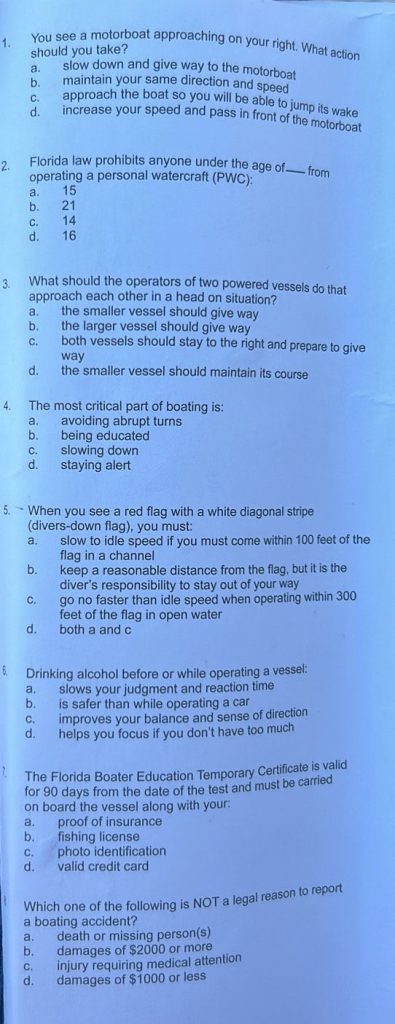
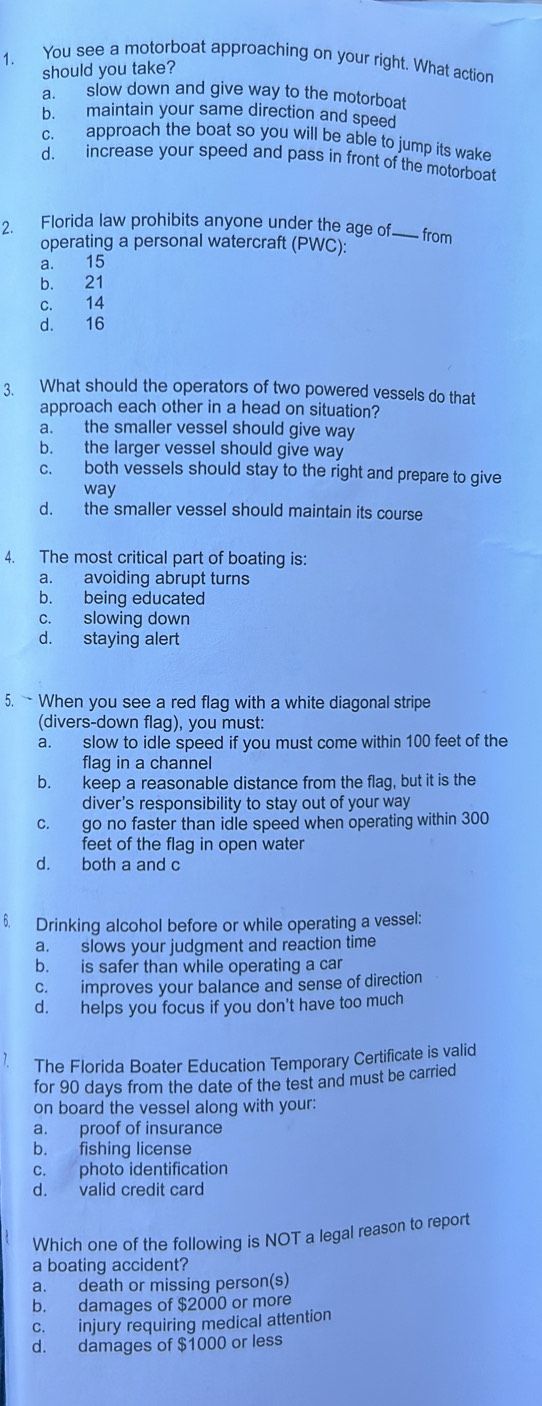
You see a motorboat approaching on your right. What action should you take?
a. slow down and give way to the motorboat
b. maintain your same direction and speed
c. approach the boat so you will be able to jump its wake
d. increase your speed and pass in front of the motorboat
The correct answer is A. slow down and give way to the motorboat. When a powered vessel approaches from your right, it is usually the stand-on vessel, and you are the give-way vessel. That means you must slow down, change course if needed, and avoid crossing in front of it. In short, if you see a motorboat approaching on your right. what action should you take? You should slow down and give way.
Why answer A is correct
A motorboat approaching from your right is a common crossing situation in boating rules. The safest rule is simple: the boat on the right has the right of way in many crossing situations, so the boat that sees it on the right must give way.
“Give way” does not mean panic or stop suddenly. It means you take early, clear action so the other operator can understand what you are doing. Slowing down is often the safest first move because it gives both vessels more time and space. If needed, you may also turn behind the other boat instead of trying to pass in front of it.
This rule helps prevent collisions. Boats do not stop as quickly as cars, and waves, wind, current, and visibility can make movement harder to judge. By slowing down and letting the motorboat pass, you reduce the chance of both operators making last-second moves.
Why the other choices are wrong
Choice B, maintain your same direction and speed, is not correct because that is what the stand-on vessel usually does, not the give-way vessel. If the motorboat is approaching from your right, you should not act as if nothing has changed.
Choice C, approach the boat so you will be able to jump its wake, is unsafe. Jumping another boat’s wake can cause loss of control, injury, or a collision. It is especially dangerous if you move closer to another vessel to do it.
Choice D, increase your speed and pass in front of the motorboat, is the most tempting wrong answer for some people because it feels like a quick escape. It is also very risky. Speeding up to cross in front of another boat gives both operators less time to react and can create a collision path.
The key difference is this: safe boating rules are based on predictability. Other boaters need to know what you are likely to do. Slowing down and giving way is predictable; speeding up or aiming toward the boat is not.
Quick way to remember this boating rule
Remember “right means caution.” If another powered vessel is coming from your right, treat it as the vessel you must avoid. Slow down, give it room, and pass behind it when needed.
A simple memory aid is: “If it is on your right, do not fight for the right.” Let it go first. This works well for basic boating test questions about crossing situations, especially when the options include slowing down, maintaining speed, jumping a wake, or speeding across the other boat’s path.
