
Kiến Thức Hay
what are the two parts of lift that go down a mine called
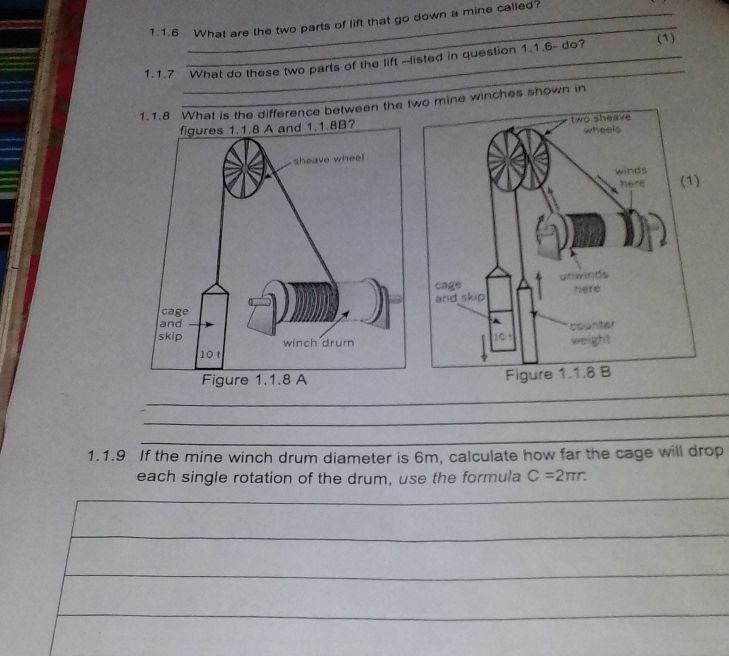
Th9
Question: What are the two parts of lift that go down a mine called?
1.1.7 What do these two parts of the lift listed in question 1.1.6 do? (1)
1.1.8 What is the difference between the two mine winches shown in 1.8B?
1.1.9 If the mine winch drum diameter is 6 m, calculate how far the cage will drop each single rotation of the drum, use the formula C = 2πr.
No A, B, C, or D options are provided in the original question.
The correct answer is: cage and skip. The cage and skip are the two lift parts that move down a mine shaft. For the question “what are the two parts of lift that go down a mine called,” the cage mainly carries people and equipment, while the skip mainly carries mined material such as ore or rock.
Why “cage and skip” is the correct answer
The cage and skip are correct because they are the working parts of a mine hoist system that travel up and down the shaft. A mine shaft is a deep vertical or sloping passage. The lift system needs separate carriers because people, tools, rock, and ore are not always moved in the same way.
The cage is like a strong elevator compartment. Miners can stand inside it, and it can also carry tools or smaller equipment. The skip is more like a large bucket or container. It is used to carry broken rock, ore, or other mined material from underground to the surface.
For question 1.1.7, the answer is that the cage and skip transport people and materials up and down the mine shaft. The key idea is movement: the winch pulls the rope, the rope moves over sheave wheels, and the cage or skip rises or drops in the shaft.
Why the other possible answers would not be correct
Winch, drum, sheave wheel, and counterweight are related to the mine lift, but they are not the two parts that go down the mine as carriers. This is the common trap in this type of question: some parts help the lift move, but they do not usually carry people or mined material down the shaft.
- Winch: This is the machine that winds or unwinds the rope. It provides the pulling force, but it does not go down the shaft with miners.
- Drum: This is the round part of the winch that the rope wraps around. It turns, but it stays in the hoisting system.
- Sheave wheel: This wheel guides the rope. It changes the rope’s direction, but it is not the carrier.
- Counterweight: This balances the load in some systems. It helps the lift work more smoothly, but it is not the cage or skip.
For question 1.1.8, the stated difference is that the first winch uses a single sheave wheel, while the second winch uses two sheave wheels and a counterweight. The second setup can balance the moving load better because the counterweight offsets part of the cage’s weight.
How the drum calculation works
The cage drops one drum circumference for each full rotation, assuming the rope winds or unwinds without slipping. The formula given is C = 2πr, where C is circumference and r is radius.
The drum diameter is 6 m, so the radius is half of that: 3 m. Substitute the radius into the formula:
C = 2πr = 2π(3 m) = 6π m
Using π ≈ 3.14, the distance is:
6 × 3.14 = 18.84 m
So the cage will drop about 18.85 m for each single rotation of the drum. This result comes from the distance around the drum. One full turn releases one full circumference of rope.
Quick memory tip for similar mine lift questions
Remember: cage carries people, skip carries stuff. If the question asks what goes down the mine as part of the lift, think of the moving containers: cage and skip. If the question asks what makes the lift move, think of the winch, drum, rope, sheave wheels, and counterweight.
For calculation questions, use the drum’s circumference. Diameter must be halved first to get the radius. With a 6 m diameter drum, the radius is 3 m, so one rotation gives 6π m, or about 18.85 m, of cage movement.
