
Kiến Thức Hay
Who has overall responsibility for managing the on-scene incident? Answer
Th9
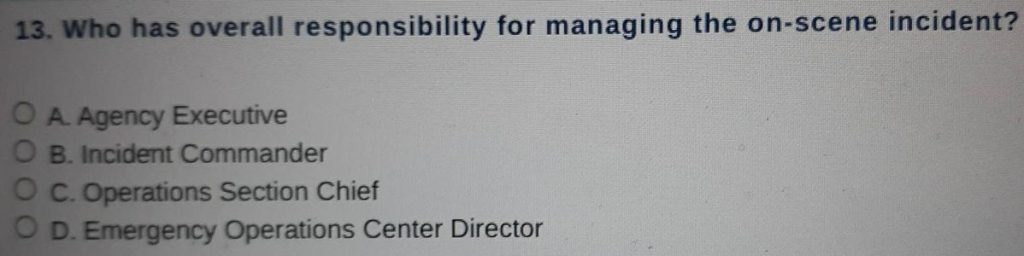
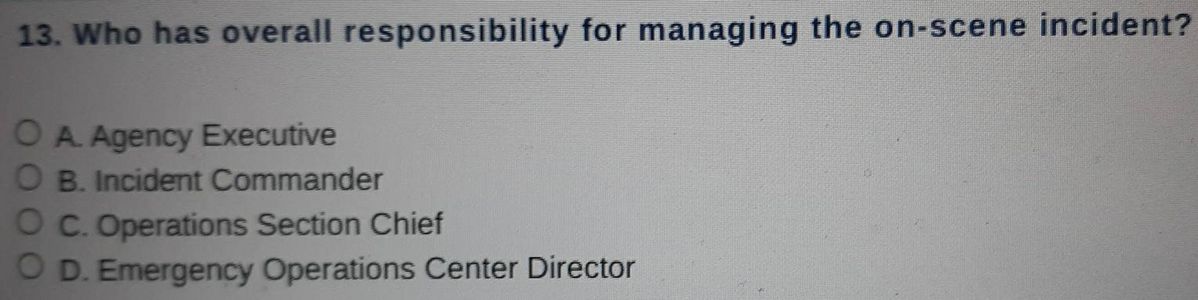
Who has overall responsibility for managing the on-scene incident?
A. Agency Executive
B. Incident Commander
C. Operations Section Chief
D. Emergency Operations Center Director
The correct answer is B. Incident Commander. The Incident Commander has overall responsibility for managing the on-scene incident because this role directs the response at the incident site. The question “who has overall responsibility for managing the on-scene incident?” points to the person in charge of incident objectives, strategies, and on-scene coordination.
Why the Incident Commander is the correct answer
The Incident Commander is the person with overall authority at the scene of an incident. In the Incident Command System, this role is responsible for setting incident objectives, choosing response strategies, assigning resources, and making sure responders work toward the same goal.
A simple way to understand it is to picture an emergency scene, such as a fire, flood, crash, or hazardous spill. Many people may be helping: firefighters, medical teams, police, public works staff, and support agencies. Without one clear on-scene leader, teams could duplicate work, miss urgent needs, or follow different plans. The Incident Commander prevents that confusion by managing the incident directly where the response is happening.
The word “overall” matters. It does not mean the Incident Commander performs every task personally. It means this person is accountable for the whole on-scene response. The Incident Commander may delegate duties to section chiefs, but the main responsibility remains with the Incident Commander.
Why the other choices are not correct
A. Agency Executive is not the best answer because an agency executive usually has broader organizational authority, not direct on-scene command. This person may support policies, resources, or agency-level decisions, but the question asks about managing the incident at the scene.
C. Operations Section Chief is the most tempting wrong answer. This role manages tactical operations, meaning the people and actions carrying out the response plan. However, the Operations Section Chief works under the Incident Commander. If the Incident Commander creates an Operations Section, that section chief handles operations, but not overall command.
D. Emergency Operations Center Director is also not correct because an Emergency Operations Center, or EOC, supports coordination away from the scene. The EOC may help with information, resources, and wider community coordination. It does not replace the Incident Commander’s authority over the on-scene incident.
How to remember this type of question quickly
For questions about who controls the scene, choose Incident Commander. The key clue is the phrase “on-scene incident.” That phrase points to the person physically or functionally in command of the response at the incident site.
Use this shortcut: “Incident scene = Incident Commander.” If the question asks about overall management at the scene, the answer is the Incident Commander. If it asks about tactical work, think Operations Section Chief. If it asks about off-site support and coordination, think Emergency Operations Center.
